Call Us
+234-912-645-6837

Temporary Office Address
31, Central Avenue, Kemta Estate, Abeokuta.
 Mail us for support

Temporary Office Address
Mail us for support
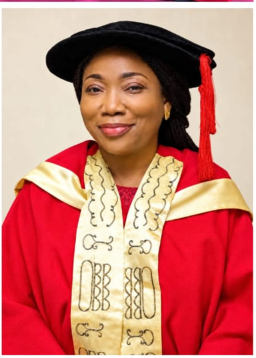
There are careers that can be measured in appointments, publications and titles. Then there are careers that acquire a different currency altogether: influence.
Professor Adebola Olufunmilayo Ogunbiyi belongs to the latter category.
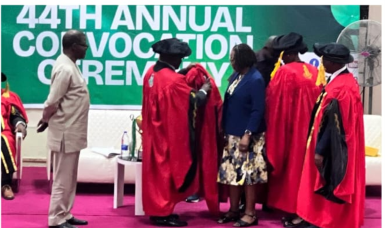
On Thursday, September 17th, 2026, at the College Auditorium of the National Postgraduate Medical College of Nigeria in Ijanikin, Lagos, her name entered another distinguished chapter in a career already marked by scholarship, service, leadership and an uncommon commitment to the advancement of medicine. The National Postgraduate Medical College of Nigeria conferred its Distinguished Fellowship on Professor Ogunbiyi alongside three other eminent medical scholars. The College’s programme describes the honour as recognition of “profound contributions” to the growth and development of the College, postgraduate medical education, the medical profession and the nation.
It is the sort of recognition that does not arrive by accident.
In the life of a serious scholar, honours are often less a destination than a footnote to years of largely invisible labour: the clinic before sunrise, the difficult case, the resident who needs guidance, the manuscript returned for revision, the lecture prepared after a long day, the committee paper nobody remembers, the research question that refuses to yield an easy answer.
The proverb says that the river that forgets its source will dry up. Professor Ogunbiyi’s career suggests the opposite truth: a scholar who remains faithful to the sources of knowledge, service and mentorship can eventually become a source herself.
Born academically at the University of Lagos, where she obtained her MBBS in 1983, Professor Ogunbiyi proceeded through residency training at Lagos University Teaching Hospital and was named Best Resident in Medicine in 1989. A Commonwealth Scholarship subsequently took her to the St. John’s Institute of Dermatology at Guy’s and St Thomas’ Hospital in London, where she obtained a Diploma in Dermatology in 1992 before earning the Fellowship of the National Postgraduate Medical College of Nigeria with subspecialization in Dermatology in 1993.
That journey would eventually make her one of the most recognizable Nigerian voices in dermatology.
At the University of Ibadan, where she joined in 1994, she built a career that refused to be confined to one compartment. She taught, researched, practised, examined, administered and mentored. She served as Chairman of the Ceremonials Committee, a Senate Representative and Pioneer Director of the College of Medicine Education Unit. Between 2019 and 2023, she became the first woman to head the Department of Medicine. She now serves as Deputy Vice-Chancellor (Academic) of the Federal University of Medicine and Medical Sciences, Abeokuta.
The progression is instructive.
For Professor Ogunbiyi, medicine has never been merely about treating what appears on the surface. Dermatology itself, in her hands, becomes a window into epidemiology, public health, culture, genetics, social behaviour and the wider architecture of human wellbeing.
Her scholarship bears this out.
Her research has examined the prevalence and changing patterns of skin diseases in Ibadan and among schoolchildren in southwestern Nigeria. Her work has also extended into hair and scalp disorders, cutaneous malignancies, albinism, chronic renal failure and the relationship between hepatitis C and lichen planus. Her publications include research on skin disease epidemiology, pseudofolliculitis barbae, acne keloidalis nuchae, indigenous therapies for hair and scalp disorders, and cutaneous neoplasms in skin of colour.
Such work matters because medicine becomes meaningful only when knowledge eventually finds a human being.
A statistic in a journal is one thing. A better diagnosis in a clinic is another. A trained resident who carries that knowledge to another hospital is something else again.
And that is where Professor Ogunbiyi’s legacy becomes larger than her bibliography.
The NPMCN citation records that she has mentored more than 25 dermatology residents, many of whom have gone on to become professors. It also records more than 90 peer-reviewed publications and six book chapters.
That is the mathematics of intellectual succession: one scholar teaches twenty-five, twenty-five teach hundreds, and hundreds ultimately touch thousands of patients.
The footprint has also crossed Nigeria’s borders.
Professor Ogunbiyi has served as President of the Nigerian Association of Dermatologists, Vice President of the African Society of Dermatology and Venereology and Vice President of the International Society of Dermatology. She has also served in international dermatological organizations and participated in the International Dermoscopy Society’s “Imaging in Skin of Color” Task Force. Her international leadership helped create opportunities for Nigerian residents to acquire advanced procedural skills abroad.
The significance of that work is easily underestimated.
Science is not advanced merely by publishing papers. It is advanced by opening doors.
And Professor Ogunbiyi has spent much of her career opening them.
Indeed, 2026 has already proved an extraordinary year of recognition. The American Academy of Dermatology awarded her its Presidential Citation Award, citing her “outstanding leadership” in shaping dermatology in Nigeria and beyond and recognizing her as a pioneering educator. The University of Ibadan independently announced the honour in March.
Now comes the Distinguished Fellowship of the National Postgraduate Medical College of Nigeria.
There is something fitting about the College bestowing this particular honour on a scholar whose own professional life has been so deeply intertwined with postgraduate medical education. Her service to the College has included chairing the Faculty of Internal Medicine and, currently, the Senate Docimology Committee.
Docimology is, in essence, the science and practice of assessment. It is a technical field, but its human consequence is profound. The standards by which doctors are examined ultimately influence the standards by which patients are treated.
That may be one of the less visible dimensions of Professor Ogunbiyi’s contribution: she has not merely helped produce doctors; she has helped shape the standards by which doctors are produced.
There is an old African wisdom that says the person who climbs a good tree deserves encouragement from those below. Yet some trees become so tall that their branches provide shade far beyond the place where they were first planted.
Professor Ogunbiyi’s professional life has taken that trajectory.
From Lagos to Ibadan. From the clinic to the classroom. From dermatology to medical education. From Nigeria to international professional leadership. From personal scholarship to the multiplication of other people’s scholarship.
And now, from distinguished service to Distinguished Fellowship.
The title itself is important, but the story behind it is more important.
For honours are transient. Institutions change. Offices change hands. Academic titles eventually become biographical entries. What remains is the work.
The patient who received better care.
The resident who became a consultant.
The consultant who became a professor.
The researcher whose findings altered understanding.
The Nigerian specialist who found a professional door open abroad because someone had first opened it.
The institution strengthened by a scholar who understood that leadership is not the occupation of an office but the enlargement of other people’s capacity.
That is the deeper measure of Professor Adebola Ogunbiyi.
She has spent a career examining the skin, but her contribution to medicine has never been skin-deep.
The Distinguished Fellowship conferred by the National Postgraduate Medical College of Nigeria therefore reads not simply as another decoration on an accomplished career. It reads as an institutional acknowledgement of a body of work already written into Nigerian medicine: in scholarship, in specialist training, in professional leadership, in research, in education and, most importantly, in people.
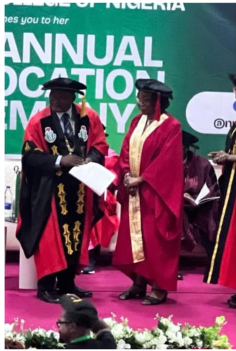
In the final reckoning, perhaps the finest tribute to a scholar is not that she accumulated honours, but that her work made excellence contagious.
Professor Ogunbiyi’s career offers precisely that lesson.
A good scholar leaves papers.
A great teacher leaves students.
A distinguished physician leaves healthier patients.
But the rare scholar does all three, and then leaves behind a standard by which the next generation measures itself.
That is the inheritance being celebrated today.
And it is an inheritance worthy of the name Professor Adebola Olufunmilayo Ogunbiyi, FMCP, FWACP, FRCP, FNAMed, IFAAD.
Some honours decorate a career.
The best ones illuminate it.